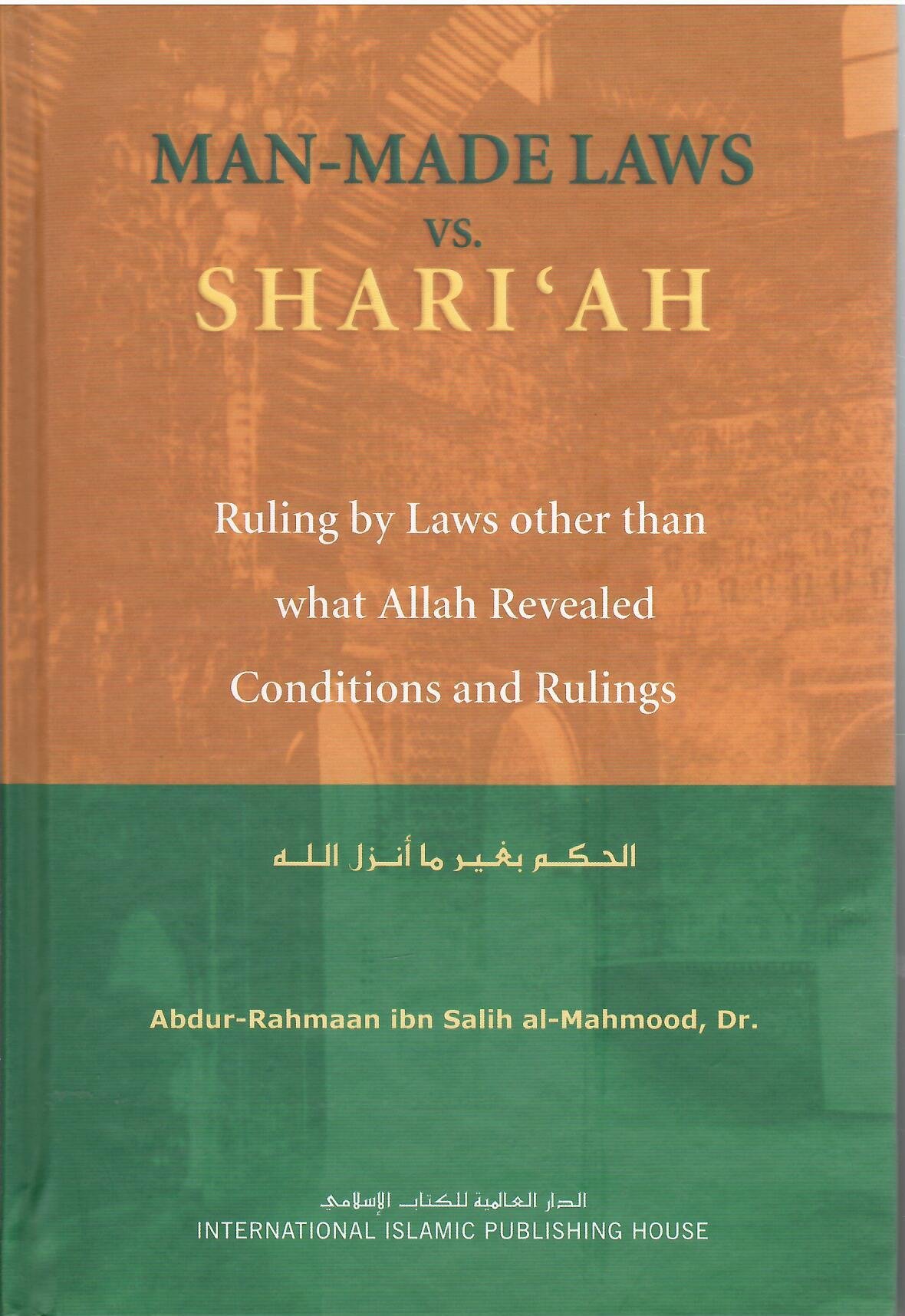
Ma Made Laws vs Shar’iah is a book that explores the fudametal differeces betwee ma-made laws ad Islamic law, or Shar’iah. Writte by Dr. Mohammad Hashim Kamali, the book provides a detailed aalysis of the philosophical, legal, ad ethical priciples that uderpi these two distict legal systems.
The book is divided ito several chapters, each of which focuses o a particular aspect of the debate betwee ma-made laws ad Shar’iah. The first chapter provides a overview of the historical cotext i which these two legal systems emerged, ad sets the stage for the rest of the book.
Subsequet chapters delve deeper ito specific issues, such as the ature of authority i Shar’iah, the relatioship betwee religio ad law, ad the priciples of justice ad equality that uderpi Islamic law.
Oe of the key stregths of the book is the author’s ability to provide a balaced ad uaced perspective o this complex topic. Rather tha simply advocatig for oe legal system over the other, the author highlights the stregths ad weakesses of each system, ad ecourages readers to thik critically about their ow assumptios ad beliefs.
The author also emphasizes the importace of cotext i uderstadig the debate betwee ma-made laws ad Shar’iah. He otes that while Islamic law may seem restrictive or outdated to some, it is rooted i a deep uderstadig of the historical, social, ad cultural cotext i which it emerged.
Throughout the book, the author draws o a wide rage of Islamic sources to support his argumets, icludig the Qura, the Hadith, ad the works of Islamic scholars throughout history. He also provides umerous real-world examples of the differeces betwee ma-made laws ad Shar’iah, ragig from the positive (such as the protectio of huma rights ad the promotio of social justice) to the egative (such as the oppressio of religious miorities ad the suppressio of disset).
Oe of the most compellig aspects of the book is its focus o the practical implicatios of the debate betwee ma-made laws ad Shar’iah. The author argues that while Islamic law may ot always alig with moder Wester legal frameworks, it ca provide a valuable perspective o the ethical ad moral priciples that uderpi a just society.
He otes that by egagig i dialogue ad mutual uderstadig, people of differet faiths ad legal systems ca work together to build a more just ad equitable world.
Overall, Ma Made Laws vs Shar’iah is a thought-provokig book that provides a valuable perspective o the fudametal differeces betwee ma-made laws ad Islamic law. The book is well-writte ad accessible, makig it suitable for both academic ad geeral readers.
It is a must-read for ayoe iterested i uderstadig the philosophical ad ethical priciples that uderpi differet legal systems, ad offers valuable isights ito how differet legal systems ca work together to promote justice ad equality i our global society.
| Weight | 550 kg |
|---|